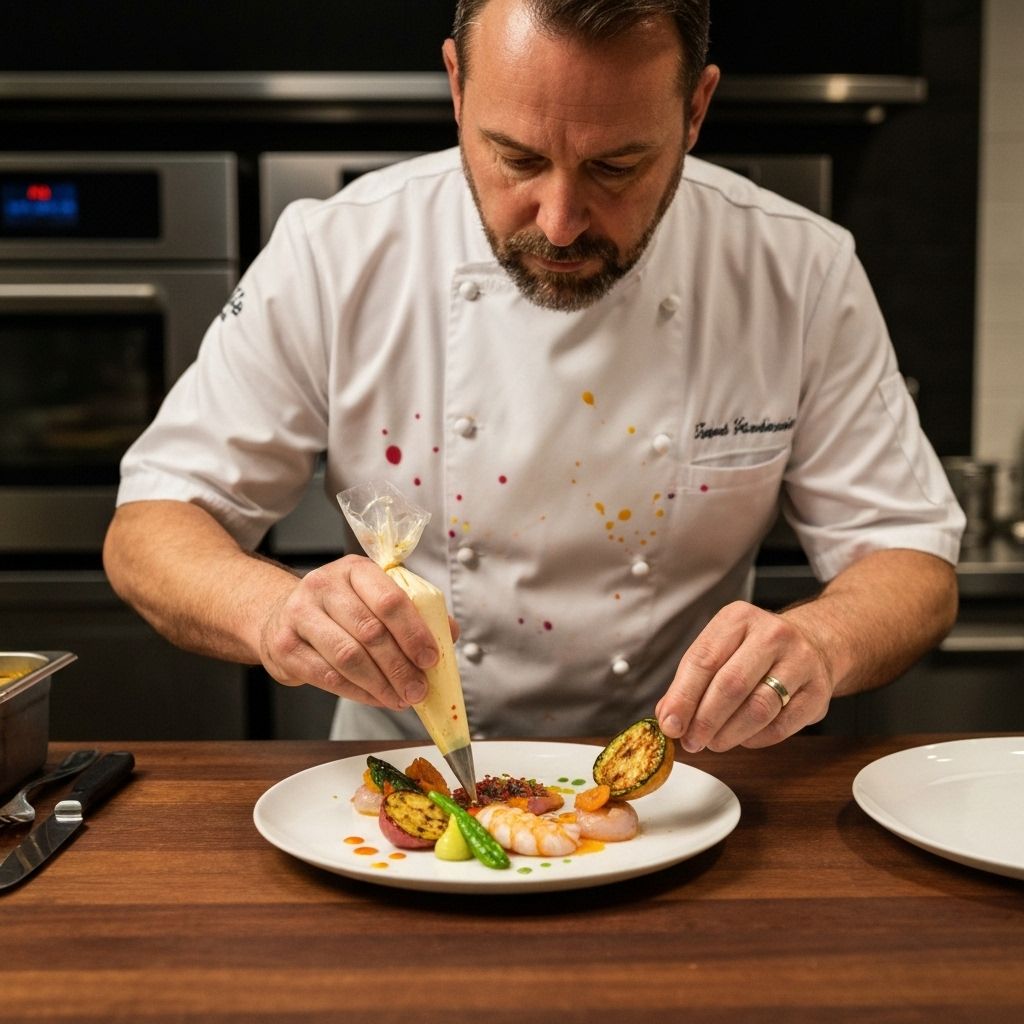
The Art of Food Plating: Creating Visual Masterpieces
Chef Marcus Thompson
Executive Chef with 20 years of experience in fine dining
Learn how to elevate your dishes with professional plating techniques that transform ordinary meals into extraordinary culinary experiences.
Food plating is much more than simply arranging food on a plate – it's an art form that engages all the senses and creates a memorable dining experience. In this comprehensive guide, we'll explore the fundamental principles and techniques that professional chefs use to create stunning presentations.
The Principles of Beautiful Plating
Successful food plating relies on several key principles: balance, contrast, focus, and flow. Balance ensures that no single element overwhelms the plate, while contrast creates visual interest through colors, textures, and heights. The focal point draws the eye to the star of the dish, and flow guides the diner's gaze around the plate.
Essential Plating Techniques
Start with the main protein as your focal point, positioning it slightly off-center. Use the clock method – imagine the plate as a clock face and place your protein between 3 and 9 o'clock. Arrange accompaniments to complement rather than compete with the main element.
Height adds drama to your presentation. Stack components vertically or lean elements against each other to create dimension. However, ensure that the dish remains practical to eat – beauty should never compromise functionality.
Color and Garnishing
A well-plated dish incorporates a variety of colors. Use vibrant vegetables, fresh herbs, and colorful sauces to create visual appeal. Remember that we eat with our eyes first – a colorful plate stimulates appetite and suggests freshness.
Garnishes should always be edible and relevant to the dish. Avoid random decoration that doesn't enhance the flavor profile. Fresh microgreens, edible flowers, or a drizzle of reduced balsamic can elevate a simple dish into something special.
Practice Makes Perfect
Like any skill, plating improves with practice. Take photos of your plated dishes, analyze what works and what doesn't, and continuously refine your technique. Study plating presentations from fine dining restaurants and culinary magazines for inspiration.